Thursday, September 07, 2006

How do I love thee?

I was going through a stack of papers tonight and I came across an old note from my wife. It was a pink sheet of paper and "How Do I Love Thee? Let me count the ways..." is printed across the top. Then she filled in the following:


  • You are a great dad

  • You spend lots of time with JD and AJ

  • You have a very kind heart

  • You work hard on improving yourself

  • You are very handsome

  • You have a great voice

  • You take care of all of us

  • You work hard to support us

  • You help take care of the house

  • You are honest

  • You are kind to animals

  • You are faithful

  • You are incredibly smart

  • Yet, you are humble

  • You are generous with time and money

  • You read with your kids

  • You don't laugh at my silly fears

  • You have terrific hair and lips

  • You are gentle


I'm so lucky to have such a supportive spouse. My wife rocks (see also this post). I wouldn't be the person I am today without my wife and I couldn't have accomplished many of the things I've accomplished without her either. Her support means more than I can explain.

Wednesday, September 06, 2006

Progress

A friend of mine AC sent me an email today about my blog. Specifically, he said:

I just got through two days straight of reading through it. I don’t know if you’ve had a chance to view it as a whole collection, but you get the sense of immense personal growth in the period you’ve been writing this. Your belief in God seems to have gone from tentative to certain (and now you’re dealing with issues of religious theology pre-assuming God). It’s amazing. Keep it up!

A couple of quick reactions. Wow, two straight days of reading! Amazing my blog could hold his attention for that long - or maybe he just powered through it since he's my friend. Regardless, I'm very impressed and feel very loved. =) Thanks AC, hopefully you got something out of the blog personally.

In terms of the whole collection, no, I haven't had a chance to go back and read through prior entries. I'm sure it would be fascinating to do that sometime. Interesting that AC saw so much growth / progress in such a short period of time (roughly six months). When you're going through a change personally (whether it's losing weight or deciding what to do about religion), you often lack sufficient distance (or objectivity) to really gauge how much progress (if any) you're really making. So it's great to get an outside perspective and some positive feedback.

Tuesday, September 05, 2006

Revenge of Gaia

I received a Washington Post article in the mail today from my mom (thanks!). It was called "The End of Eden" (see online version) and it was about James Lovelock's new book The Revenge of Gaia: Earth's Climate Crisis and the Fate of Humanity. The basic gist of the book and article is that we're all screwed. It reminded me of Al Gore's comment that "in the long run the earth is going to be fine. It's humans who are at risk" (see this post). Lovelock argues that the most of the world will become uninhabitable before we can do anything about it - "billions of us will die and the few breeding pairs of people that survive will be in the Arctic where the climate remains tolerable." Lovelock dismisses solar cells, recycling, wind turbines, etc saying "it won't matter a damn ... [people] make the mistake of thinking we have decades. We don't."

A very gloomy outlook indeed. Here's how I see things. I think Lovelock is generally right about what's going on with the planet but I hope to God he's wrong about whether we can still do something about it and how soon the ill-effects of global warming will play out. Regardless, I'm inheriting this problem from prior generation and my children will inherit it from me. I can't do anything about that. The choice in front of me is what I do in the face of this information. On some level, it's a binary decision. I can either do something about the problem or not. Having chosen to do something about the problem, there's a spectrum of options from there - from totally realigning my whole life/career around helping solve the problem to simply recycling more and riding my bike to work. As we speak, I'm attempting the realignment option - updated my resume and trying to find a position at a solar cell company in the Bay Area. Either I'm going to make a difference or go down fighting. At least I'll be able to look my kids in the face 10 to 20 to 30 years from now and honestly say I tried my best to make the world a better place for them.

Sunday, September 03, 2006

Faith & Reason

In one of my mother-in-law's family letters, she mentioned a Bill Moyers series on PBS called Faith and Reason. Specifically, she talked about an interview she'd seen with Sir John Houghton. I just watched it and found it quite interesting. A good use of 26 minutes. Two things stuck with me. First, Houghton said that, as a scientist, he thinks it's important to be able to say "I don't know". As a believer, it's also important to be able to say "I don't know". Lack of specific knowledge does not invalidate a particular scientific or spiritual belief. Second, Houghton had an interesting idea that God may exist in a fifth dimension beyond space and time. In that sense, God could be anywhere and everywhere in space and time simultaneously. An interesting concept and one that isn't incongruent with my current world view.

To the extent you're interested, there were 11 other people interviewed in Bill Moyers' series (see portraits).

The power of advertising

I just read this post from the Cleantech blog and it reminded me why I'm so fired up at the moment about global warming. Some people may disagree regarding how severe this problem is and what needs to be done about it, but I believe it's more likely than not that this is a big problem (and not going away) and I'm personally not willing to take significant risks with the world that my kids will inherit. The sentiment is captured well in a recent TV ad by Environmental Defense. In it, the narrator stands on a railroad track with a train approaching behind him, talking about climate change coming 20-30 years from now and saying the problem is beyond his lifetime. He steps off the track just before the train is to hit him, but standing behind the narrator is a little girl, who is implied to be inevitably steamrolled by the locomotive (see ad here). The guys at Cleantech compared the Environmental Defense ad to the legendary (if not infamous) "daisy" ad that LBJ used against Goldwater in the 1964 election (see Wikipedia or PBS). I can only hope that global warming ads like this one have a similar impact on the collective consciousness as the daisy ad had on the 1964 election.

Invisible soccer ball

I was reading parts of the book The God Particle a little while ago. Leon M. Lederman (a Nobel prize winner) wrote the book as an argument for the construction of particle accelerators that could find a Higgs boson - a hypothetical particle that might hold a key to the subatomic world of quarks and leptons. There was one excerpt regarding an "invisible soccer ball" that particularly struck me. It is fairly lengthy so I created a separate page for the excerpt rather than include it here - but definitely check it out if you have interest. The except concludes with the following observation:

This is an extended metaphor for many puzzles in physics, and it is especially relevant to particle physics. We can't understand the rules (the laws of natures) without knowing the objects (the ball) and, without a belief in a logical set of laws, we would never deduce the existence of all the particles.

The same could be said about religion and the existence of God. I continue to believe that science (and the scientific method) has much to teach us about our search for God - and vice versa.

Saturday, September 02, 2006

Belief-O-Matic

I took a test on the beliefnet site last night. The site claims that "even if you don't know what faith you are, Belief-O-Matic™ knows. Answer 20 questions about your concept of God, the afterlife, human nature, and more, and Belief-O-Matic™ will tell you what religion (if any) you practice ... or ought to consider practicing. Warning: Belief-O-Matic™ assumes no legal liability for the ultimate fate of your soul."

Here are my results. Per the email I received, a couple of caveats ... The top score in the list below represents the faith that Belief-O-Matic, in its less than infinite wisdom, thinks most closely matches my beliefs. However, even a score of 100% does not mean that my views are all shared by this faith, or vice versa. Belief-O-Matic then lists another 26 faiths in the order of how much they have in common with my professed beliefs. The higher a faith appears on this list, the more closely it aligns with my thinking.


Honestly, I'm not sure what (if anything) to make of the results. I've never even heard of three-quarters of these religions. And my gut says I'm more likely to be a Mormon than a Neo-Pagan but perhaps I shouldn't be so quick to jump to conclusions. At any rate, if I do decide to affiliate myself with a particular religion in the future, I'll worry about it then. For the time-being, I'll just consider myself a Reform Jew. =)

Where we meet God

In the most recent ExploreFaith.org newsletter, they poise the question of where we meet God. Specifically, "what does it mean to lead a spiritual life?" Offering a Jewish perspective, Rabbi Micah D. Greenstein says:

Spirituality - whether you are Christian, Muslim, a Jew or a Hindu - is religion experienced intimately. You might say it's the core, the essence of religion. Spirituality is where you and God meet and what you do about it. It doesn't have to be, as Larry Kushner says, "other worldly," such as in Handel's "Hallelujah Chorus." For most people, spirituality is ordinary and every day. It's a buzzword today. Earlier generations probably called the same idea sacred or holy. One of the great Jewish philosophers of all time, Abraham Joshua Heschel, who is a great mystical theologian, suggested that spirituality is life lived in the continuous presence of the divine. I like Heschel's definition a lot.

He goes on to offer his top ten list of what it means to be a spiritual person today:

  • To view the world as an ultimate mystery rather than as a mechanized machine
  • To view life as meaningful rather than meaningless
  • To view life as a lesson in gratitude
  • Giving as a matter of obligation for what you owe, not as something that is nice to do
  • To realize that mind, body, and soul are all gifts of God
  • To acknowledge life's mysteries, even the questions that have no answers
  • To trust in the goodness of life and all the potential this implies
  • To always hope and never succumb to despair
  • To strive for goodness, not things - to believe that honesty, integrity and dignity matter more than anything else
  • The belief that every person carries with them the special signature of God

The question of spirituality is also approached from a Buddhist perspective, Christian perspective, and Muslim perspective - although I haven't had the chance to read them yet.

Independent of these essays, if someone asked me the question "where do you meet God", I would say it's in moments where things seem to make sense - whether that's a moment of clarity or insight at work (with a business or technical problem), a connecting of the dots (see this post), or some new piece of scientific knowledge (see this post). If solving complex problems is my purpose in life (see this post), this would seem a logical meeting place for me and God. In that sense, I guess I do live in the continuous presence of the divine.

Tuesday, August 29, 2006

LDS Primary and beyond

In response to my post regarding the Sacramento Temple, one reader asked me "How do you feel about your sons going on LDS missions? How do you suppose you would feel if you did not get to attend their temple weddings?" - not in a bad way, in a genuinely curious way. Even though I'm personally not a member of the LDS church, my kids are being raised in that faith.

A couple of comments. First, I think it's better for my kids to be raised with religion and a faith in God rather than without it. Since I can't offer a more compelling alternative, I'm happy for the kids to be part of the LDS church. That being said, it is my sincere hope that we expose them to other faith traditions over time and that they grow up to be tolerant of other religions (or even benefit from other religions to augment their world view). Also, at some point (perhaps in their teens, perhaps sooner or later), I would like my kids to make up their own minds regarding which faith they want to pursue long-term. If that turns out to be the LDS church, I will fully support that decision. But I want it to be their decision (at the appropriate time) and not place any expectations on them regarding what they ultimately decide.

In terms of going on LDS missions, again, I would want it to be their decision. I'm personally not an advocate of actively trying to convert people from one faith to another. That said, I know a number of people who have been on missions and they seemed to have been valuable life experiences for them. Also, having missionaries available as a resource to those investigating the church is certainly helpful. I just have trouble with the door-to-door, unsolicited attempts to spread the faith. But, as I said, if my sons decide to go on LDS missions, I will fully support them in that endeavor.

Regarding having a temple wedding, I would probably be pretty sad to miss the ceremony itself. Perhaps there would need to be a seperate mock ceremony for my benefit. =) Regardless, like I said, I'm fine with my kids being raised LDS until they're old enough to choose for themselves. After that, it's up to them. So I'd run into the same challenge if they were raised a different faith and then converted to LDS later in life (but before they were married). At that stage of the game, I basically view all of this as being out of my control. What is in my control, however, is supporting my children in whatever is most important in their lives. If that included a temple wedding, I'd stand outside the temple and be the first one to embrace and congratulate them on the way out.

Interesting how having kids brings the question of religion into the forefront. It's definitely important to be on the same page regarding these issues before the kids are born - especially if the parents are of different faiths. I can see now why so many people try to marry within their own faith to avoid these concerns.

Sunday, August 27, 2006

Photographic essence

Many people say "a picture says a million words." Martha Graham said that "the body says what words cannot." I've often wondered whether you could capture the essence of one's being in a single photograph. The thought experiment goes something like this. What if someone asked you to describe someone, what it was really like to know them, what they were all about. But, instead of being able to use words, you could only hand them a single photograph. Could you really do justice to answering that question with a single photo - with a record of a single instant in time? I'm not sure that you could. But you might be able to come close.

I thought of this question today as I was scanning a picture of my son JD (see high-quality version here). Perhaps it's just because I know him so well but I think this photo really captures a lot of his essence - creative, energetic, a love for life.

So, here's a thought-provoking question (that I haven't figured out for myself). If you were going to be remembered by a single photograph, which one would it be and why? Would it be a current photo? One from your childhood? Would the photo be of just you or would it be a group shot? Would it be fun or serious? An everyday shot or a special event? Would you even be in the photo or would it be a piece of art or a scene from nature?

Sacramento Temple

On Friday, the whole family (including my sister-in-law HG) drove up to Sacramento (technically Rancho Cordova) to attend the open-house for the new Sacramento LDS Temple. This is the 123rd temple worldwide and the 7th in California. There is one relatively close to us in Oakland and another close to where I grew up in Bethesda. Since I'm not a member of the LDS Church, this could very well be my only opportunity to see the inside of a LDS temple.

For those of you not familiar with LDS temples, here are two questions and answers from a handout I received (see scans of all handouts here).

Q: What is the purpose of the temple?

A: Members of The Church of Jesus Christ of Latter-day Saints consider the temple the house of the Lord. Inside, Church members learn more about the purpose of life and make covenants to serve Jesus Christ and other people. In addition, they participate in ordinances such as baptism and eternal marriage for their deceased ancestors.

Q: What is the inside of the temple like?

A: The interior of the temple does not resemble a great hall or a cathedral. Instead, it contains a number of rooms, each designed to accommodate certain ceremonies, such as marriage, baptism, and instructional sessions. Church members participating in these ordinances change into simple, modest, white clothing. The color white symbolizes purity and reverence.

A couple of observations from the trip. It was a gorgeous day - very sunny. The temple itself was quite beautiful - not as stunning or majestic as the ones in DC or SLC but still an impressive piece of architecture. Many commented that it's similar to the temple in Fresno. I was a little disappointed that the interior of the temple isn't more exotic. Other than the baptismal font (resting on the backs of 12 oxen, symbolically representing the 12 tribes of Israel), all of the rooms were fairly ordinary - although impeccably designed and furnished. During the informational video at the beginning of the tour, a couple of church members commented that temples are like a piece of heaven on Earth. I personally didn't get that feeling going through the building but I'm also not a church member.

On our way into the temple grounds, there were people holding signs for SacredOrSecret.com. It's always amazing to me to see people who want to tear down other people's beliefs rather than exemplify their own. In the case of LDS temples, I guess people fear what they can't personally experience or understand. The same is true with fraternities (like Kappa Sigma), other secret societies, and their rituals.

On a whole, I'm very glad I took the day to visit the temple. I'm especially glad that I got to share the experience with my wife, kids, and HG - all of whom are church members.

Tuesday, August 22, 2006

We Feel Fine

I came across a cool site today - We Feel Fine - based on an article in the Juice Analytics blog. Here's the concept (more in their mission statement):

Since August 2005, We Feel Fine has been harvesting human feelings from a large number of weblogs. Every few minutes, the system searches the world’s newly posted blog entries for occurrences of the phrases “I feel” and “I am feeling”. When it finds such a phrase, it records the full sentence, up to the period, and identifies the “feeling” expressed in that sentence (e.g. sad, happy, depressed, etc.). Because blogs are structured in largely standard ways, the age, gender, and geographical location of the author can often be extracted and saved along with the sentence, as can the local weather conditions at the time the sentence was written. All of this information is saved.

Give the applet a try. It's pretty fascinating to explore the range of emotions out there - complete with quotes and the ability to drill down into different categories (e.g., show me feelings from August 2006 when it's sunny out for men in their 30's who live in California). Makes you feel not so alone in how you're feeling.

Sunday, August 20, 2006

Band of Brothers

About a month or so ago, I borrowed the mini-series Band of Brothers from a co-worker. I ripped through the 10 hours of DVDs in a weekend - it was that good. The mini-series tells the story of Easy Company - a paratrooper division that sees its first action in WWII on D-Day but then endures the challenges of war all the way through the fall of the Nazi regime in Germany. Whenver I see movies like this, I wonder how I would have reacted in those types of situations in my late teens or early twenties - seeing friends die, facing your own likely death, killing others, integrating newcomers into the company, coming back from injuries, holding the line in the dead of winter, seeing a concentration camp, etc. I want to believe I would have risen to the challenge but I'm not so sure. I think I would have been fine laying down my own life but it would have torn me apart to see others in my company (especially close friends of mine) die. I doubt I could have taken that for long.

The Rock

Dwayne Douglas Johnson a.k.a The Rock is an interesting guy. I've seen a couple of interviews with him and he seems quite down-to-earth in real life. There was an article about him in the September 2006 issue of Men's Health's magazine entitled "The Rock's Rules for Reinvention". Some of my favorite excerpts were:

"Always improve. Always evolve. Never give up."

"Clarity is king: being very clear on what your intention is, on what your goal is ... When you have that, the truth shall set you free ... those are the most powerful tools we have in life: truth and knowledge. A lot of times the truth can hurt, the truth sucks, it can crush your ego. But it's freeing just to know it. Make sure that everyone is very, very clear on things."

"My director once quoted a basketball player who said, 'When you are not practicing, remember, someone somewhere is practicing, and when you meet him, he will win.' I think I jumped up and threw my table across the restaurant, it connected so well with me. But a lot of times you have to dial it down a bit ... Going without sleep is counterproductive. At some point, you just have to get off that treadmill."

There was also a good swiss-ball exercise I'll need to keep in mind for the future:

Get into pushup position, resting your shins on a Swiss ball. Raise your hips as high as you can as you roll the ball toward your body. This is the starting position. From here, bend your elbows to lower your chest toward the floor, pause, then push yourself back up. "You can do so many variations," says Johnson. "Lift one leg, come down slow, isometrically hold the pushup, with your face 6 inches off the ground. It works your core, shoulders, triceps, chest, balance, everything."

Interesting that I'm taking life advice from a former pro wrestler but it's important not to judge a book by the cover. I'm learning that everyone has something to share with us if we're willing to really listen.

Growing backlog

Some of you may have noticed that I haven't posted much recently - only 3 entries thus far in August compared with an average of almost one a day (or at least 3-4 a week) prior to that. There's two main reasons for that: (1) a trip I took to NYC for my cousin's wedding and for an industry conference, and (2) a talent show I organized at work that just took place. During that time, plenty of topics have been piling up in a backlog and hopefully I'll get through them all at some point. Topics include:

  • Hinduism - part 2 (the follow-up to this post)
  • Godicles (sort for God Particles, based on a conversation I had with PG in NYC)
  • Talent show reflections
  • Searching for truth - responses to questions from Mormon missionaries
  • Band of Brothers reflections
  • How do you know I love you?
  • Buddhist perspective (based on this article from ExploreFaith.org)
  • Karaoke cable car (including article from Men's Health magazine)
  • The Rock's rules for reinvention (from this article in Men's Health magazine)
  • Consumerism (visceral reactions at Costco and Bed Bath & Beyond)
  • Prayer book (idea courtesy of EGE)
  • Screwtape letter with me as the patient (based on Screwtape Letters by C.S. Lewis)
  • Stumbling on Happiness reflections (once I finish the book)
  • The Language of God reflections (once I finish the book)
  • Americans and Climate Change reflections (once I finish the paper)
  • Plan B 2.0 reflections (once I finish the book)
  • Bible relfections (once I get back to reading it)

So no lack of things to talk about ... just a lack of time to investigate and talk about them. I'm really enjoying this explosion of interest in such a diversity of topics. At the same time, I find myself jumping around between topics too much - getting through the first chapter of a book, for example, and then starting a new book that catches my eye. Definitely not being as efficient as I could be but that's probably ok given where I am right now.

Sunday, August 13, 2006

Distant cousins

My first-cousin got married a week ago (outside NYC). At the wedding, my brother and I met some distant cousins from England. Their mother is our aunt's cousin. It was fun meeting them and getting to know them a bit. Now, here's the most interesting part from my perspective. Prior to the wedding, these cousins could have walked past me on the streets of Manhattan and I would have never realized that we were related in any way. Makes me wonder how many times that's happened in my life. How many times have I encountered a family member, friend of a friend, or other connection in everyday life and not realized it? If I had known the connection, would I have treated these people differently?

Pi

I was recently in NYC for a couple of days and got to catch up with some old friends from college, including PG. I've always referred to PG as an "enigma". The guy totally fascinates me. We were catching up over drinks and the conversation eventually turned to PG's hypothesis that pi is a dimension rather than a number. It has always bothered him that π has an infinite number of digits and cannot be calculated precisely. Per the Wikipedia, "the exact value of π has an infinite decimal expansion: its decimal expansion never ends and does not repeat, since π is an irrational number (and indeed, a transcendental number). This infinite sequence of digits has fascinated mathematicians and laymen alike, and much effort over the last few centuries has been put into computing more digits and investigating the number's properties. Despite much analytical work, and supercomputer calculations that have determined over 1 trillion digits of π, no pattern in the digits has ever been found." [Note: In case you're interested, this Web page shows π to 1,000,000 places.] This all got PG wondering whether π is actually its own dimension and we simply experience a projection of it in our three-dimensional environment (or four-dimensional space if you include time).

Admittedly, thinking of π as its own dimension is a little far-fetched. When I mentioned it to JK (another college friend), he asked me "is PG doing ok ... he's not taking drugs, right?" But there might be more to this than we immediately realize. I just finished watching a NOVA documentary called The Elegant Universe. My brother suggested that I check it out (thanks!). The documentary is about the field of string theory. String theory has attempted to unify general relativity with quantum mechanics. Some refer to it as a "theory of everything". One thing which is challenging about this theory is that it requires 10-11 dimensions - six of which form a Calabi-Yau shape. Many string theorists believe that fundamental constants derive their values from properties of these additional dimensions. Therefore, the idea that π is its own dimension is likely not correct but its curious properties might indeed be the result of additional dimensions that are projected onto the 3-4 dimensions that we (as humans) are most comfortable with. Food for thought.

Thursday, August 03, 2006

Eternal damnation

I'm becoming a big fan of the ExploreFaith.org newsletter. This week, there was an article entitled "Do Christians believe followers of other religions are doomed?" It's a good question and one that I've struggled with in the past. For example, if I choose to affiliate myself with a particular religion, am I implicitly saying that particular religion is "right" (or at least "more right") and other religions are "wrong" or "confused" or "incomplete"? Not surprisingly, the article takes a moderate (almost politically correct) stance on the subject. But there is some thought-provoking material in there. My two favorite excerpts were:

(1) My own feeling is that Christianity is unique but it is not exclusive. Let me illustrate: A magnifying glass focused on the bare shoulder of a person can burn and burn deeply. That glass makes more intense the heat of the sun. But that sun is shining all over the world--it just burns more intensely through the magnifying glass. My belief is that God is trying to make his love known through every source possible-- this includes religions other than Christian. In their religion they find a magnifying glass.

(2) We make God too small when we declare that only people like us can know God.

I'm currently of the opinion that all religions are incomplete in some way. For example, why would God create man and then offer revelations to different people / prophets around the world (“to every people we have sent a messenger”)? One explanation is that God wants man to search out the “truth” and conduct that search of their own free will. But that begs the question of why such a search for truth (religion) has led to so much turmoil and violence in the world? Perhaps it’s all a test of man. Perhaps God gave different pieces of the puzzle to different faiths but left enough overlap and confusion that it wouldn’t be immediately clear which pieces were which (or even what is or isn’t a piece in the first place) and how the pieces go together. Perhaps that man’s greatest test – finding a single truth among all the revelations (old and new), being selfless and God-seeking enough to set aside some of our prior beliefs, and come together as a people (all of us) in that new found truth.

Or maybe there is indeed one true faith and the rest of us will suffer eternal damnation. I doubt it, though. I just can't accept that's how God operates.

Monday, July 31, 2006

Myers-Briggs

I've taken the MBTI personality test a couple of times now. Each time, I've gotten a different result. My first year of business school (roughly 8 years ago), I was ISFP. The following year, I was INFP. When I took the test today, I was INFJ. You could either say that the test isn't particularly good at pinpointing my type - with the only commonalities across all three tests being I(ntroversion) and F(eeling) - or that my type has changed over time. I actually believe the latter since everytime I've done the test the results have resonated with me at the time. If you have a moment, read through the description of INFJ and let me know if you agree with the assessment.

Sunday, July 30, 2006

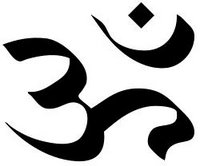
Hinduism - part 1

As I mentioned in my world view post, my father is Hindu and my mother is Christian. I recently decided to learn more about Hinduism. My mom sent some information to me and my brother via email. I also read the chapter on Hinduism in The World's Religions, watched the first two tapes of the Bill Moyers special "The Wisdom of Faith with Huston Smith", and read the Wikipedia entry on Hinduism. I won't try to describe all Hindu belief or practicce here. I'm certainly no expert based on this limited investigation. Rather, I'll just focus on the things that I've learned so far that were most meaningful or surprising to me. I suspect I will return to Hinduism again and incorporate many of its philosophies and practices into my world view. Hindus believe that the goals of spiritual life can be attained through any religion so long as the religion is practiced sincerely. So, even if I ultimately go down the Christian route, it doesn't mean I'd need to forego the insights and teaching of Hinduism (see this mission in India that my grandfather was a member of later in his life).

One immediate misconception I had about Hinduism is that it's polytheist. This brief essay does an excellent job of distinguishing between Brahman (the unique Godhead of Hinduism who has no other and no second, "thou before whom all words recoil"), Iswara (the all powerful Almighty which is the subject of all religions), and other deities such as Kali. The logic chain is fascinating to me:

The difficulty with this concept [Brahman] is this; there is no subject-object relationship in this context, Brahman cannot be the object of cognition, since Brahman has no second. In fact nothing can be predicated about Brahman without delimiting the infiniteness of Braham. So Hindu Vedanta, with a mathematical precision, has postulated that the moment one wants to think of Brahman as an object of thought, one has already delimited Brahman and is only thinking of Iswara, , otherwise called saguna Brahman – Brahman with attributes. Iswara is the all powerful Almighty which is the subject of all religions. It has all the supreme qualities of Brahman – if Brahman could be said to have qualities or attributes – and, in addition, it could be the object of our thought process. By its very nature all names and forms suit it. The Vedic logic here is really very subtle, interesting and should be enjoyed as such. It has no name or form and therefore it could be called by any name and could be given any form. The concept of idol worship is the practical implementation of this unique logic of Hinduism. Hinduism has the daring to carry the rationale of this to its logical conclusion and hence it is we find a plethora of gods and goddesses in the Hindu framework.

To oversimplify, there is a single, infinite God (Brahman) but that God can manifest itself in a number of lesser, finite forms (Iswara and deities) that are easier for man for understand and relate to. These lesser forms, however, do not diminish or compete with "THAT" which "permeates everything in the world".

But what is Hinduism all about? Huston Smith says "if we were to take Hinduism as a whole - its vast literature, its complicated rituals, its sprawling folkways, its opulent art - and compress it into a single affirmation, we would find it saying: You can have what you want. This sounds promising, but it throws the problem back in our laps. For what do we want? It is easy to give a simple answer - not easy to give a good one. India has lived with this question for ages and has her answer waiting. People, she says, want four things." The first two (pleasure and success) form the Path of Desire and the second two (duty and liberation) form the Path of Renunciation (see excerpts from The World's Religions or this Web page for more detail).

I've been thinking a lot about the Path of Desire and the Path of Renunciation today. Specifically, I think I'm transitioning from one path to another. In some ways, I've been doing it my whole life but never realized it until now. It would explain a lot. I've always felt that I was meant to do something great in this life. Given our cultural stereotypes, I had always associated that material wealth and power (the second half of the Path of Desire). But it's really not that. It's about serving my fellow man, about making a difference in this world (whether that's the environment or something else). I might remain in the business world but it takes on a very different complexion when viewed through the lense of duty rather than success.

Our society (on a whole) is so focused on pleasure and success that you get sucked into it. I've wondered why I can't embrace it more fully. It's actually quite uncomfortable and alienating - especially here in Silicon Valley. But I've probably had multiple lifetimes to really enjoy (and suck dry) the Path of Desire. I've had my fill and now I find it wanting.

There's so much more to say about Hinduism, including the eternal within us (Atman-Brahman), the way to God through knowledge (Jnana yoga), karma, non-attachment, etc. More to come in subsequent posts.